Water Tanks Guide -
07 November 2025
The Complete Guide to Choosing the Right Water Tank
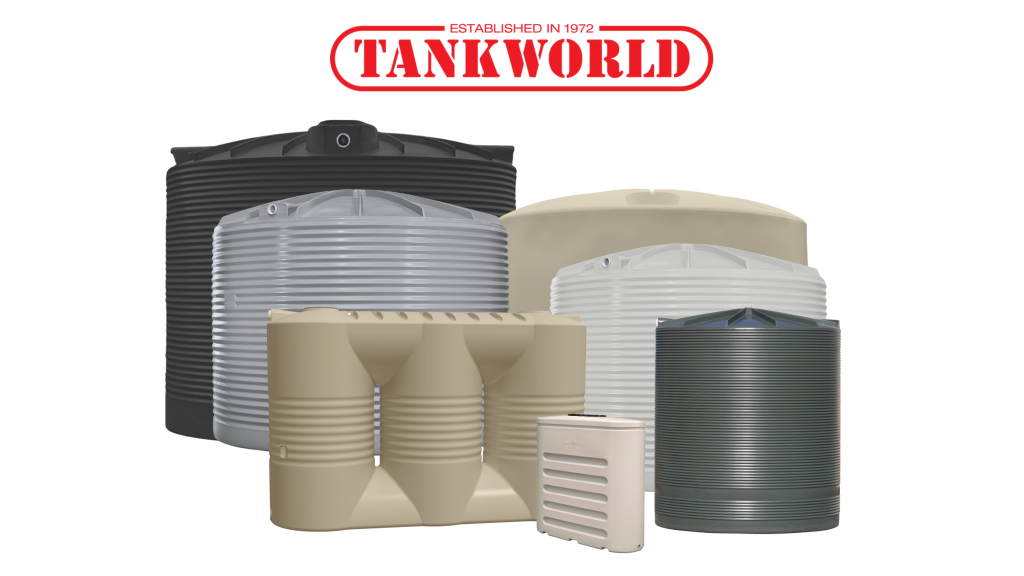
Choosing the right water tank starts with understanding how much water you want to store, the space available on your property and how you plan to use the water. Tank size, material, shape, roof catchment, rainfall and installation requirements can all affect which option suits your property.
This guide explains how to choose the right water tank for an Australian home, farm or rural property, step by step, including the main factors to consider before selecting a tank.
If you are ready to compare products, browse Tankworld’s complete water tank range.
What is a Water Tank?
A water tank is a storage container designed to collect and hold water for later use. In Australia, water tanks are commonly used to store rainwater collected from roofs and other suitable catchment areas.
Depending on the property and water system, stored water may be used for:
- Household water supply where suitable
- Toilets and laundry
- Garden watering and irrigation
- Property and shed water supply
- Rural and livestock water needs
- Dedicated firefighting water where required and appropriately configured
The right tank depends on what you want the stored water to do, how much you need and the space available for installation.
What Is the Best Water Tank for Your Home?
There is no single water tank that suits every home. The best water tank for your home depends on your available space, roof catchment, local rainfall, intended water use and how much water you want to store.
For example, a slimline tank may suit a suburban property with limited side access, while a larger round tank may be more practical where there is enough open space and greater storage is required. Rural properties may need considerably more capacity than a home using rainwater mainly for gardens or outdoor taps.
Rather than choosing a tank based on capacity alone, consider the complete system, including where the tank will sit, how water will enter it, how often the stored water will be used and whether a pump or other equipment is required.
👉 If you want to compare popular Tankworld options after working out your requirements, browse our best selling water tanks.
How to Choose the Right Water Tank (Step-by-Step)
When choosing the right water tank, work through the decision step by step rather than starting with a particular capacity or tank style. Your water requirements, available space and property conditions should determine which options are suitable.
Consider these five areas before selecting your tank:
- How much water you want to store
- The tank material suited to your requirements
- The shape that fits your available space
- Where the tank can be safely installed
- Any installation, plumbing or local requirements that apply
Step 1: Choose the Right Tank Size
The right tank size depends on how much rainwater you can collect, how often you plan to use the stored water and how much room you have for a tank.
Consider:
- Roof catchment area: a larger suitable catchment can collect more rainwater.
- Local rainfall: rainfall patterns affect how frequently your tank can refill.
- Water use: garden watering, household connections, livestock and other uses have different storage requirements.
- Available space: the capacity you want still needs to fit safely on your property.
- Dry periods: consider how much stored water you may want available between rainfall events.
Tankworld offers options ranging from compact tanks for smaller spaces through to large-capacity tanks for farms, acreage and higher-volume water storage.
Consider Roof Catchment and Rainfall
Tank capacity should be considered alongside how much rainwater your roof can realistically collect. A very large tank may provide useful reserve capacity, but its usefulness depends on rainfall, catchment area and how quickly stored water is used.
As a simple guide, one millimetre of rain falling on one square metre of suitable roof area represents approximately one litre of water before system losses. Actual collection will be lower because some water is lost through first-flush systems, overflow and other inefficiencies.
Consider How You Will Use the Water
A tank used mainly for occasional garden watering has different requirements from a system supplying toilets, laundry, livestock or regular irrigation.
Before selecting a capacity, make a list of the intended uses and consider how frequently water will be drawn from the tank. This gives you a more useful starting point than choosing a tank based only on household size.
Water Tank Sizes and Indicative Tank Costs
| Tank Size | Capacity Range | Price Range | Best For |
|---|
| Small Tanks | 330L – 1,000L | $350 – $560 | Gardens, small households |
| Small to Medium Tanks | 1,000L – 5,000L | $430 – $1,720 | Small homes, light water use |
| Medium Tanks | 5,000L – 10,000L | $1,520 – $1,690 | Average suburban homes |
| Medium to Large Tanks | 20,000L – 25,000L | $2,340 – $3,045 | Larger homes, families |
| Large Tanks | 30,000L – 47,750L+ | $5,400 – $7,400 | Rural properties, farms, off-grid |
💡 Prices are indicative and can change. Actual pricing depends on the tank model, capacity, configuration, delivery location and any additional equipment or installation required. Check the relevant Tankworld product or category page for current pricing.
👉 To compare capacity groups, explore our small water tanks, medium tanks and large water tanks.
Additional Costs to Consider
The tank itself may not be the only cost involved in setting up your water storage system. Depending on your property, location and intended use, additional costs may include:
| Additional Cost | Approximate Cost | What Can Affect the Cost |
|---|
| Tank base preparation | Approx. $400–$1,200+ | Base type, tank size, site condition, excavation and access |
| Water tank pump | Approx. $600–$1,200+ | Pump type, pressure requirements, capacity and installation |
| Plumbing and connections | Approx. $400–$1,800+ | Pipe runs, number of connections, toilets, laundry and outdoor taps |
| Mains water switching or top-up | Approx. $400–$900+ | System type, plumbing configuration and installation requirements |
| Downpipes, first flush and overflow | Approx. $250–$900+ | Existing gutters, pipework, number of downpipes and drainage requirements |
| Delivery | Varies by location | Tank size, delivery distance, regional location and property access |
| Underground tank excavation | Quote required | Tank size, excavation depth, ground conditions, machinery access and site preparation |
These figures are indicative third-party cost ranges as at September 2026 and are not Tankworld installation quotes. Tankworld supplies water tanks but does not provide installation services. Actual costs vary by location, site access, system design, trades required and installation complexity. Obtain current quotes from appropriately qualified local tradespeople before budgeting for installation.
Step 2: Choose the Right Tank Material
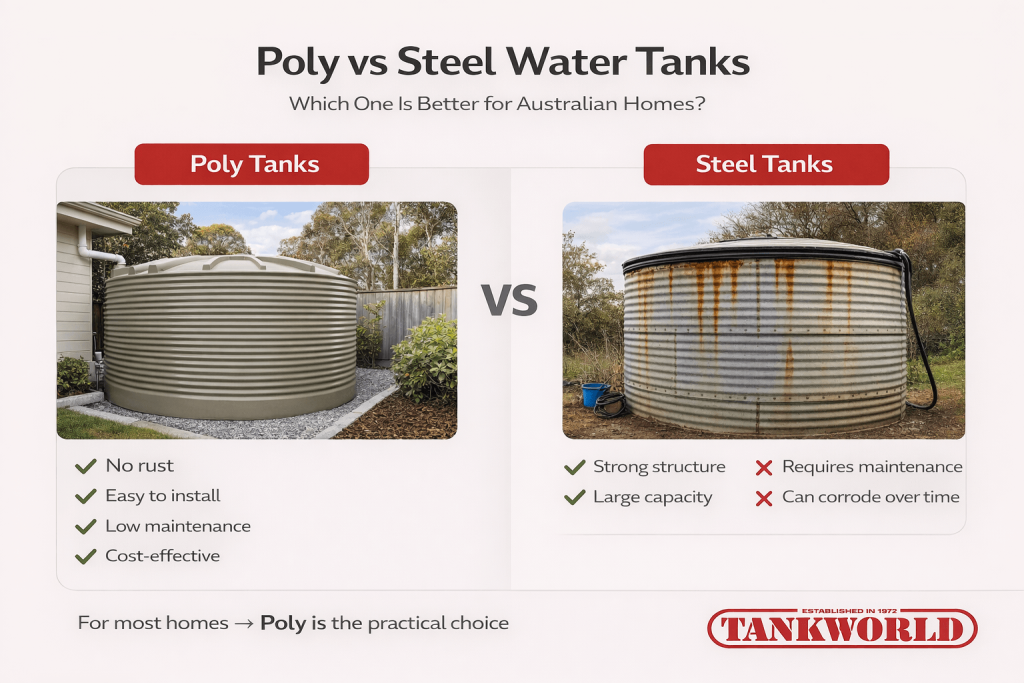
Water tanks are available in different materials, including polyethylene, steel and concrete. Each has different characteristics, so the right choice depends on your property, installation requirements, budget and intended use.
Poly Water Tanks
Polyethylene water tanks are widely used for residential, rural and agricultural water storage. Tankworld poly tanks are manufactured from UV-stabilised polyethylene and are corrosion-resistant, relatively lightweight and available in configurations suited to both compact residential areas and larger properties.
Browse our poly water tanks to compare available capacities, shapes and colours.
Steel Water Tanks
Steel tanks are another established water-storage option and are available in different sizes, finishes and configurations. Depending on their construction, they may use liners or protective coatings and can have different installation and maintenance requirements from polyethylene tanks.
Concrete Water Tanks
Concrete tanks can provide high-capacity water storage and may be installed above or below ground depending on their design. Their weight and installation requirements mean site preparation, access and professional installation are particularly important considerations.
If you are comparing materials, read our poly vs steel water tanks guide for a more detailed comparison.
Step 3: Choose the Right Tank Shape
Tank shape matters because the available installation area can be just as important as storage capacity. Not every tank shape is available across every capacity, so once you have an idea of how much water you want to store, compare the shapes and sizes available for your property. Measure the proposed site and allow for fittings, plumbing, access and any required clearances.

Designed for narrower areas, slimline water tanks suit spaces beside homes, garages, sheds and fences where a round tank may not fit. Tankworld’s slimline range includes capacities from approximately 330L to 5,000L, subject to current product availability.

Designed for properties with more open space, round corrugated tanks suit residential, rural and agricultural water storage. Available capacities range from around 1,000L to 47,750L, making them a practical option when larger storage capacity is required.

Designed for properties where above-ground space is limited, underground water tanks provide discreet water storage below ground. Available capacities vary by model, making them a practical option where suitable excavation, site preparation and professional installation are possible.
Step 4: Choose the Right Tank Placement
Where you place a tank affects the tank shape you can choose, installation access, plumbing layout and ongoing maintenance.
Urban and Suburban Properties
For homes with limited outdoor space, consider narrow side areas, spaces beside garages or sheds, and other locations where a tank can be safely installed without obstructing normal access.
Slimline and smaller tanks can be useful where space is restricted. Underground options may also be considered where site conditions and installation requirements allow.
Rural and Regional Properties
Rural properties often have more room for larger-capacity tanks but may also have greater water-storage requirements for gardens, livestock, sheds, household use or other property needs.
Consider vehicle and delivery access, the distance between the catchment and tank, plumbing requirements and how stored water will be distributed around the property.
For higher-capacity applications, browse our farm water tanks.
Step 5: Check Local Requirements
Requirements for water tank installation and plumbing can vary depending on your location, property, tank system and intended use.
Before installation, check applicable state and local council requirements, particularly if the tank will be connected to household plumbing, used as part of building work or installed in an area with specific planning, bushfire or water-storage requirements.
Licensed trades should be used where plumbing, electrical or other regulated work requires them.
Water Tank Installation and Maintenance
Tankworld supplies water tanks but does not provide installation services. Depending on your tank and how it will be used, installation may involve base preparation, plumbing, pumps, stormwater connections and other site-specific work. Use appropriately qualified tradespeople where required and obtain quotes based on your property and system.
Installation Considerations
- A suitable, level and correctly prepared tank base
- Safe access for tank delivery and positioning
- Correct connection to the roof catchment and gutters
- Overflow management
- Leaf strainers and suitable inlet screening
- A first-flush system where appropriate
- A suitable pump if pressurised water is required
For more detail, see our water tank installation guide.
Maintenance Considerations
Water tank maintenance depends on the system and intended water use. Regularly inspect gutters, screens, strainers, inlets, overflows, pumps and visible plumbing, and remove accumulated leaves or debris.
The tank and catchment system should also be periodically checked for damage, contamination risks and anything that could affect water quality or system performance.
Why Invest in a Water Tank?
A water tank can give you access to stored rainwater for appropriate uses around your home, farm or property. The benefits depend on how the system is designed and how the stored water is used.
- Reduce reliance on mains water: collected rainwater can be used for suitable household or outdoor applications.
- Make use of roof runoff: a tank allows rainfall collected from suitable roof areas to be stored for later use.
- Support gardens and property needs: stored water can provide a useful supply for irrigation, outdoor cleaning and other appropriate uses.
- Increase water storage: larger systems can provide additional reserve capacity for rural and regional properties.
- Support property planning: appropriately configured water storage can form part of a broader drought, rural or bushfire preparedness plan where relevant.
Which Water Tank Is Right for Your Property?
The right tank is the one that matches your water requirements, property and available space rather than simply the largest tank you can fit.
For a home with limited side access, a slimline or compact tank may be suitable. Where there is more room and greater water demand, a larger round tank may provide more useful storage. Farms and acreage properties may need substantially greater capacity or multiple tanks depending on water use.
Before deciding, ask:
- What will I use the stored water for?
- How much suitable roof catchment do I have?
- How much rainfall does my area receive?
- How much installation space is available?
- What tank shape will fit the site?
- Which tank shapes are available in the capacity I need?
- How will the water be pumped or distributed?
- Can the selected tank be safely delivered to the installation area?
Once you know those requirements, it becomes much easier to select a water tank that suits your property.
Choosing a Water Tank FAQs
How do I choose the right water tank?
Start with how you plan to use the stored water, your roof catchment, local rainfall and the space available for installation. Then compare suitable tank capacities, materials and shapes. The right tank should provide useful storage while fitting your property, water requirements and installation area.
What is the best water tank for a home?
The best water tank for a home depends on the available space, roof catchment, local rainfall and how the stored water will be used. Slimline or smaller tanks can suit properties with limited space, while larger round tanks may suit homes with more room and greater storage requirements.
What size water tank should I choose?
Choose a tank size based on how much suitable roof catchment you have, local rainfall, available installation space and how frequently you expect to use the stored water. Garden watering and occasional outdoor use may require less storage than regular household, irrigation or rural applications.
Should I choose a round or slimline water tank?
A slimline tank can be useful where installation width is limited, such as beside a house, shed or fence. A round tank can suit properties with more open space and is available across a broader range of capacities. Consider both the space available and the capacity you need before choosing a tank shape.
What should I consider when choosing a water tank material?
Consider durability, corrosion resistance, weight, installation requirements, maintenance, available tank sizes and your property conditions. Polyethylene, steel and concrete tanks have different characteristics, so compare them against your specific installation and water-storage requirements.
Do you need council approval for a water tank in Australia?
Whether approval is required for a water tank depends on your location, property and installation. Requirements can vary between states and local councils, and additional rules may apply to plumbing connections, tank placement, building work or properties in bushfire-prone areas. Check the current requirements with your local council and relevant state authority before installation.
How much rainwater can you collect from your roof?
As a simple guide, 1mm of rain falling on 1m² of suitable roof area represents approximately 1 litre of water before system losses. For example, 20mm of rain falling on a 100m² roof represents about 2,000 litres before allowing for losses from first-flush systems, overflow and other collection inefficiencies. Actual collection will depend on your roof catchment, rainfall and rainwater system.
Does Tankworld install water tanks?
Tankworld supplies water tanks but does not provide installation services. Depending on your system, you may need appropriately qualified tradespeople for plumbing, pumps, base preparation or other installation work. Check the requirements for your tank and obtain suitable local quotes before installation.
Ready to Choose Your Water Tank?
Choosing the right water tank is easier when you start with your property and water requirements rather than a particular tank size. Consider your intended use, roof catchment, rainfall, available space, tank material, shape and installation requirements before comparing products.
Tankworld has been manufacturing water tanks in Australia since 1972, with manufacturing facilities in New South Wales, Victoria and South Australia.
When you are ready to compare your options, browse the complete Tankworld water tank range or explore some of our best selling water tanks below.
-
$2,795.00 – $3,070.00
$2,795.00 – $3,070.00
$3,020.00 – $3,295.00
-
$940.00 – $1,105.00
$940.00 – $1,105.00
$940.00 – $1,105.00
-
$1,840.00 – $2,005.00
$1,840.00 – $2,005.00
$1,840.00 – $2,005.00
-
$965.00 – $1,075.00
$965.00 – $1,075.00
$1,040.00 – $1,150.00
Author
Digital Marketing Coordinator at Tankworld, specialising in SEO, advertising, and brand growth for Australia’s leading water tank manufacturer. With over 7 years of digital marketing experience, a Bachelor of Communication, and a passion for sustainable living, Diana helps Australians discover smarter water-saving solutions.